

This article is based on a webinar Verve Ventures held in June 2022. David Sidler interviewed Michael Lütolf about the implications of the bear market in public equities on private companies’ valuation.
2022 has been marked by geopolitical instability that flared up with the Russian invasion of Ukraine on February 24. Inflation has reached new heights, driven by rising energy prices. The Fed has already raised interest rates four times in 2022, and other central banks have followed suit. The S&P 500 index has lost more than 20% in the first half of the year and entered bear market territory. High-flying technology stocks have fared much worse than this. IPO activity has cooled dramatically, with IPO proceeds in the US in the second quarter falling by 95% in Q2 2022 compared to Q2 2022. Even if tech stocks have recovered in the recent weeks in anticipation of a softer monetary policy stance, the outlook today is much more clouded than a year ago.
The difficult macroeconomic situation isn’t just bad for shareholders of public companies. The end of cheap money has affected private markets as well. Valuations have come under pressure and venture capital firms (VCs) have become more selective.
Private companies start slashing their cost
A few examples show that “down rounds”, where startups raise new capital at a lower valuation than in their last financing round, have already happened. Fintech Klarna has been reported to seek new capital at a valuation of USD 6.5bn, a huge drop compared to its USD 45bn valuation in 2021. Many startups are cutting costs to reduce their cash-burn rate and extend their financial runway more into the future. This mostly means cutting staff. Fast grocery delivery startup Getir, for example, is slashing 14% of its workforce, around 4500 roles globally.
It is not just that the size of large financing rounds has become smaller. Having realized that it will also become more difficult for them to raise funds from investors, venture capitalists have slowed their pace of new investments. The combined effect was visible in the aggregate sum that European startups managed to raise in Q2 2022. It reached USD 23.7bn, down 38% from a record USD 38bn a year ago, according to Crunchbase, a data provider.
As Michel Lütolf, Principal at Verve Ventures, explains, less available capital for startups will mean less aggressive growth, as investors urge startups to concentrate on capital-efficient growth, and cut down on marketing costs. Demand from customers might slow. “We tell our portfolio companies to adapt quickly to the new reality. Because startups that fail to do so will struggle to raise money going forward”, Lütolf says. The number of M&A transactions will slow down as well, and the IPO window seems to be closed for now.
As history has shown, some of the most successful startups have been started in the last downturn.
Winners can be born in a crisis, too
As history has shown, some of the most successful (and for investors, financially rewarding) startups have been started in the last downturn, the global financial crisis of 2008. Their names include Airbnb, Slack, Uber, and WhatsApp. Not having access to “free” money taught them to relentlessly focus on their product as they weren’t able to just “buy” growth no matter what the cost.
Another positive effect is that the layoffs at big startups mean more talent is available for nimbler, well-financed startups that are still hiring. In the end, talent is the most important factor for growth.
Impact on Verve Ventures
For venture capital firms like Verve Ventures, which continue to invest in new companies despite these challenges, there is less competition, explains Lütolf. It is easier to get an allocation in financing rounds, and valuations are more attractive than they have been in the past. For investors that are patient and not easily scared, now is a very attractive entry point.
Some of Verve Ventures’ portfolio companies have raised considerable amounts of money recently, at very good valuations. They now have an advantage over their competition, as they can continue to hire and still optimize their cash burn rate to survive the next 24-36 months. Usually, startups will raise enough to tide them over the next 18 months, at a 20% dilution per round (which means that current shareholders reduce their ownership proportion in the company by a fifth). But the ready availability of capital meant that some of them raised every 9-12 months in the past, at higher and higher valuations. This is certainly over now.
Many venture capitalists are currently slowing down their new investments and instead concentrate on their portfolio companies that still need to raise capital. They want to tide them over until the environment improves again. In the same vein, Verve Ventures recently announced the launch of Verve Venture Fund I, which invests in the strongest of our portfolio companies. However, as Lütolf explains, Verve doesn’t deviate from its goal to add about 30 new investments to its portfolio per year.
Investors are getting more selective again
But again, every VC firm will have startups in its portfolio that might only manage to raise at valuations that are the same as in the past or even lower, because less capital is available and their business isn’t growing as fast as it used to be. This has a negative impact on a startup, its founders, and its employees. Because as Lütolf explains, clauses in contracts give early investors additional protection in down rounds (so-called anti-dilution clauses), which means that the dilution of the founders’ shareholdings increases in a down round. Also, employees that are incentivized with stock option plans are negatively affected when they see the financial value of their options decrease.
What also negatively impacts the appetite of investors to deploy capital is that at the moment, it is much less probable that some companies return capital by doing an IPO or getting bought by an acquirer. This means that they will focus on the clear winners in their portfolio. Companies that are struggling because they haven’t reached product-market fit, for example, will find it almost impossible to raise new funds at any valuation. This means that such companies will fail faster, and their number is poised to grow.
Later-stage companies are more affected
The negative impact on valuations is dependent on the stage of the companies. Later-stage companies have seen their valuations fall quicker, and more dramatically than early-stage companies.
Tiger Global is a case in point. The New York-based hedge fund that runs several venture capital funds as well, has been one the most active deal-makers in the world in 2021, averaging more than one new investment per business day (which also led many skeptics to question the quality of their due diligence on startups). Investing mostly in late-stage deals and companies that were on track for an IPO performed spectacularly well – until it didn’t. From the start of 2022 until June, the value of Tiger Global’s holdings shrank by USD 25Bn, and some of its funds are down 60%. Late-stage startups’ valuations were quickest to adapt to the correction in the public market because their value is tied to the potential value they could have once they go public. The effect was more muted for early-stage companies that are still many years away from going public or being sold.
In a way, the normalization of valuations is positive for investors that have always shown a certain discipline in this regard. To take a concrete example: The valuation of a Software-as-a-Service company is based on its annual recurring revenue (ARR) and a multiple.
A startup with, say, 10m annual recurring revenues would be valued at 150m if investors deem a multiple of 15 to be fair.
How high this multiple is depends on how fast startups grow their ARR. A few years ago, multiples of 5-12 might have been seen as normal. But in 2021, especially in the US, investors started offering multiples of 40 up to 100, just to get into what has been seen as “hot deals”.
In Europe, this multiple expansion was less pronounced, because capital wasn’t as overabundant as in the US in the first place. Furthermore, Verve Ventures has never paid such excessive valuations, even though this meant declining investment opportunities, says Lütolf. This approach has now been validated by the normalization of multiples.
Emerging new technologies have a crucial role to play in this world and can solve some of humanity’s biggest challenges.
What this all means for the future of startup investments
As lined out earlier, valuations of startups are somewhat related to the gyrations of public markets. However, their valuations change slower than those of public companies and in general, less dramatically. As the risk-free rate in the financial markets rises (with the increase in interest rates of central banks), investors demand higher returns from risky startup investments. With less capital flowing into venture capital, and some “tourist” investors abandoning the asset class again, the outlook for investors committed to venture capital investments is not too bad.
Emerging new technologies have a crucial role to play in this world and can solve some of humanity’s biggest challenges. However, investing in groundbreaking new concepts and not just the latest “Pre-IPO” fad takes time and patience. In this regard, the current macroeconomic environment hasn’t changed Verve Ventures’ investment strategy. Verve Venture’s investment team has always backed startups based on scientific excellence, which includes deep tech and hardware startups that not many venture capital firms invest in, to begin with. Furthermore, the investment team has started to increase its effort in specific fields such as quantum computing, cybersecurity, robotics, and climate tech, outline its hypothesis in those fields, and identify startups that will not only survive the downturn but prosper in the long term.
Despite the current shakeout, and the fact that some startups will fail faster than before, venture capital as an asset class is poised to become more important in the future. More private and institutional investors will want exposure to this asset class, which has grown substantially in the past and will continue to grow in size and importance in the future.
Written by
Investors
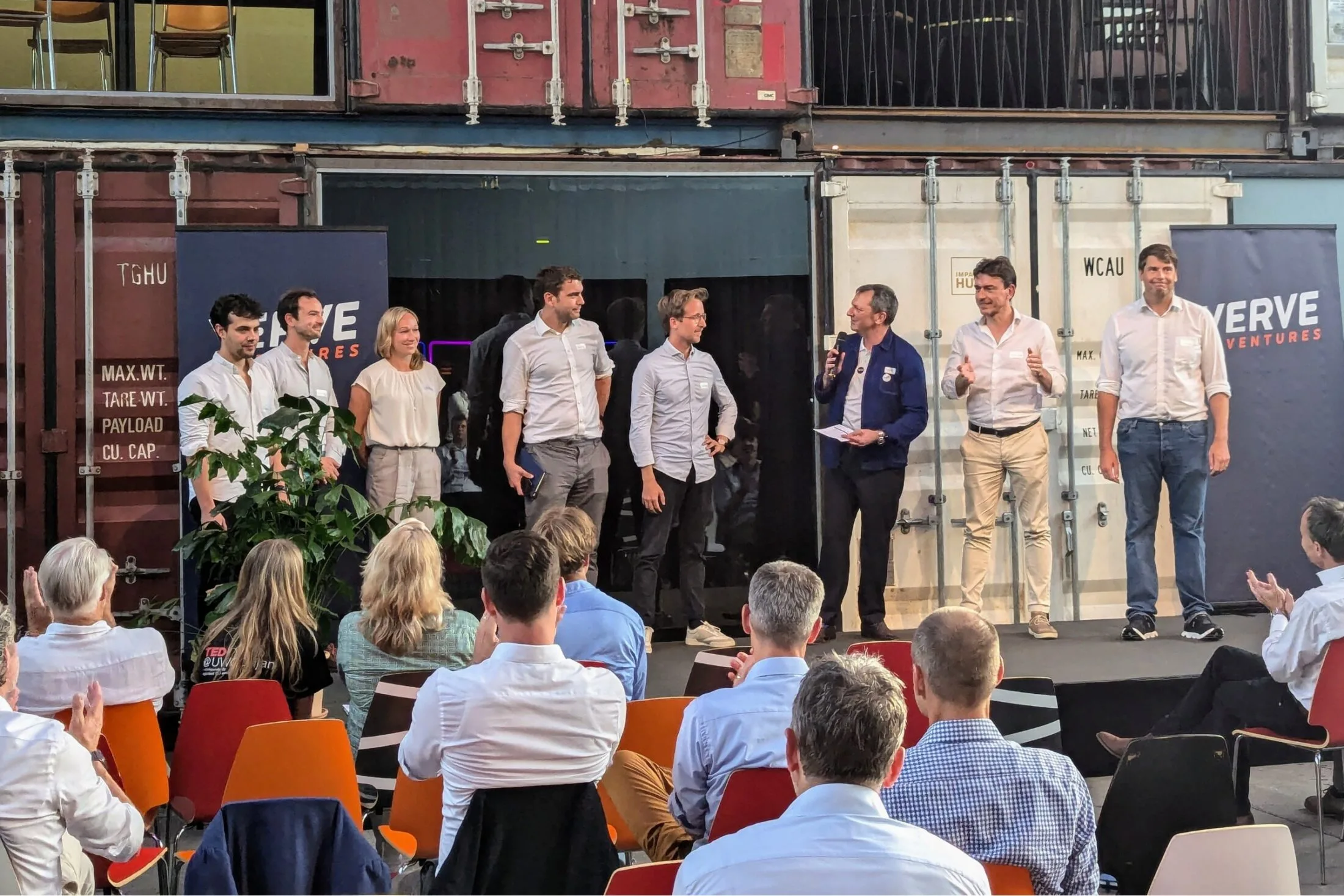
Our sophisticated investors include visionary family offices, leading wealth managers, institutions, founders, and senior executives. These individuals and organizations are all committed to shaping the next generation of innovation.
More News

How Verve Ventures finds the best startups
Verve Ventures evaluates over 4,000 startups annually, with only 100 reaching the assessment stage. In this article, we take a closer look at the steps Verve Ventures follows to reach an investment decision and the meticulous research behind it.
Supercharging our startups
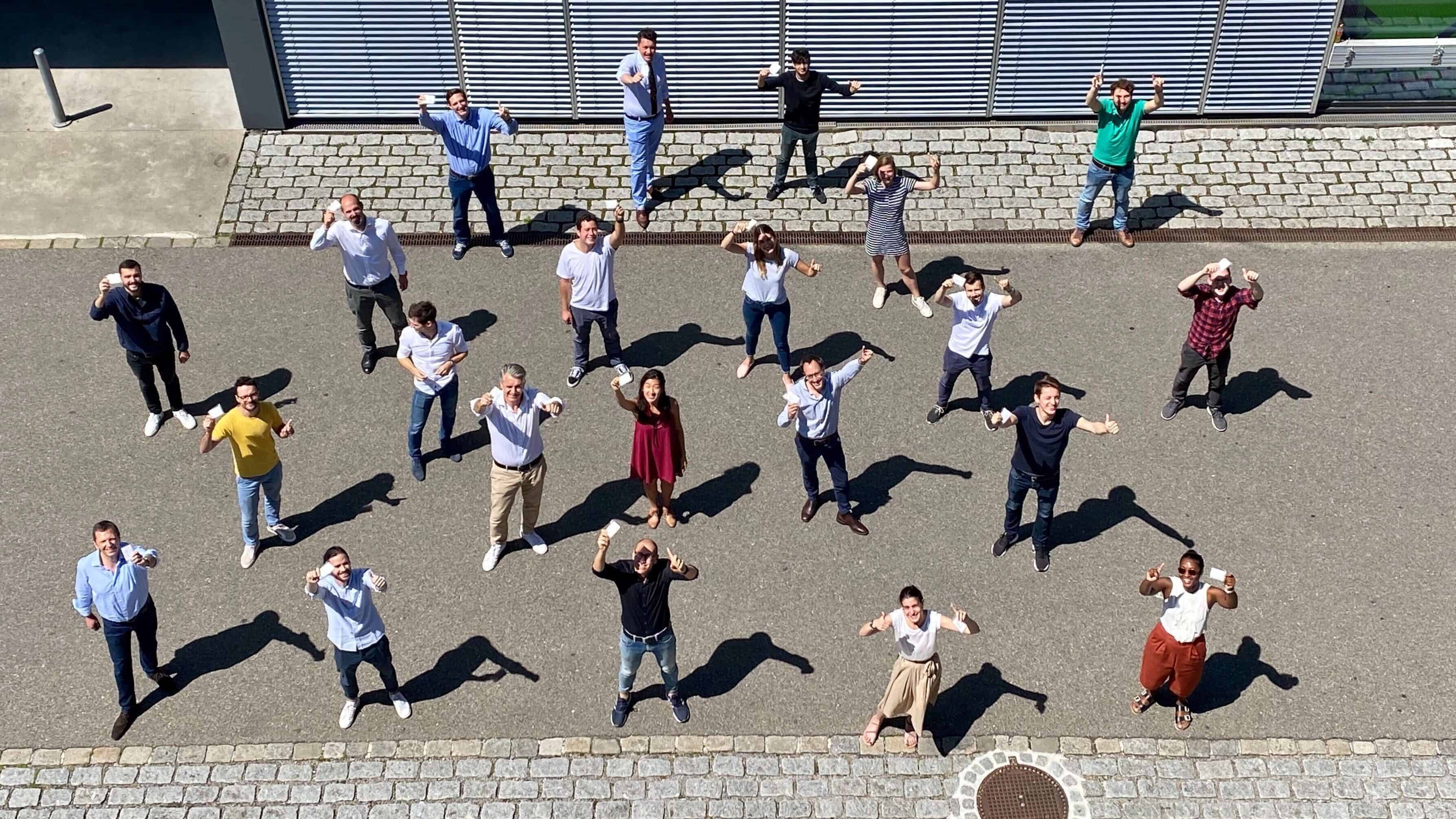
It has been more than half a year since we established our Portfolio Success Team to help our portfolio companies. We are happy to share a review of what has happened so far, what were some key results and what is coming next for the second half of 2020.
What startups should consider when hiring
In startups, hiring is arguably even more important than in large companies. It is also very challenging. Here are some valuable findings and recommendations based on a survey of 27 startups, the majority of which are also portfolio companies of us.