

Tibor Kadar

You joined Verve Ventures as an intern in 2019, before being promoted to Software Engineer in January 2020. What did you study before that?
When I joined Verve Ventures, I had just finished my Bachelor’s degree. I studied Computer Science in Romania at the Technical University of Cluj-Napoca. During my fourth year of university, I focused on researching natural language processing (NLP) – more towards machine learning and deep learning. With my university colleague Anda Diana Stoica, I wrote a paper on intent detection and slot filling in a home assistant scenario. We continued this work during the Master’s degree at the Technical University of Cluj Napoca, which also focused on artificial intelligence. This work resulted in a co-authored article published in a journal.
What do you find so fascinating about this subject?
I had the chance to study this area for my Bachelor’s thesis. I found it fascinating to tackle the problem of understanding language and thinking about it analytically. Handing this problem over to a natural language understanding deep learning model is the closest that the industry has come so far to having something that understands language. Witnessing this progress and exploring these kinds of solutions is really interesting.
What attracted you to Verve Ventures in the first place?
Verve Ventures stood out; it seemed like a place where you really can grow and have the flexibility to learn. I applied for an internship here and was invited to an interview. Since I had already done an internship at a bigger company, I wanted to experience the dynamism of a smaller company working among other startups. I really looked forward to this opportunity and they seemed to like me too – it was a match.
What does your current role as Software Engineer at Verve involve?
My day-to-day tasks fall into the category of full-stack. I get to work on new features from architecting a solution to actually implementing it, from the database to the frontend. This is what excites me about my work: I can take the problem at hand, process it internally or discuss it with my colleagues, and then go out and lay it out – the object models in the database, how the backend should behave, how the middle layer is integrated, and how the frontend looks and feels and how it affects user experience. This is very important for me – to be able to try everything and really feel like a “one-man army”. As I approach the moment when I will inevitably choose to specialize in something, trying different areas will help me.
Another area of development is on the personal side and involves people skills. I have enjoyed being involved in hiring other interns and working with members of the engineering team and others to find the best solutions tailored to our needs.
What skills do you use?
There are two dimensions to the skills required of a software engineer, in my opinion. On the one hand, it is obvious that specific technical skills are required. Our tech stack is made up of MongoDB, Scala with the Play framework, GraphQL, Ngnix and Angular with Ionic for the frontend. Our cloud infrastructure is managed using Kubernetes.
Being familiar with these technologies is only part of the skillset required, though. The contribution gets more qualitative as soft skills are involved in the process of building software. These include patience and understanding when gathering requirements, knowing when to say no and of course, knowing when to make decisions that help keep the implementation under control.
It is also very important to be able to view software as a set of Lego pieces, knowing when to build a new tool and when to piggyback on something that already exists.
What kind of problems do you solve, as a Software Engineer?
My tasks are not limited to a specific niche; they are a response to my colleagues’ needs. For example, they might like to have a nice feature to manage quarterly reports from our portfolio companies. Kevin, our product owner, gathers the requirements and spends as much time as possible on understanding the needs. After that, he shapes the requirements. I would then start by researching and understanding the problem, propose solutions and discuss them with our product owner. The projects are all different; this makes it interesting and such a good opportunity to learn and grow in many areas. One project might be focused on the backend, and another more focused on performance or good front-end architecture.
How have you been able to develop professionally since you joined Verve Ventures?
I feel like my ability to understand users’ problems and propose solutions has grown considerably. Technical improvement comes along over the course of an engineering career, as the engineer faces more and more challenges. In this sense, at Verve Ventures, I have been able to help find solutions to many challenges, which has contributed to my growth. Another very important point I would like to highlight is the requirement-gathering process. It is crucial to take the time and understand the problem at hand before building something. Since joining Verve Ventures, I have grown in these directions, and it is increasingly easy for me to gather requirements and propose solutions.
How has the scope of your role within the company evolved?
Less than a year after I joined Verve Ventures, initially as an intern, I was on the other side of the interview table recruiting new interns. Since day one, I really felt valued and managed to become a productive member of the team quite quickly; I felt that it trusted me with important tasks. It is probably part of the nature of being at a small company – the responsibilities come in and you have to pick them up. Today, I have this feeling where I feel confident in taking ownership of important projects and proposing solutions.
Our Investment Topics

Resilience inEnergy & Resources
Our future success in fields like computing and pharma relies on a resilient energy infrastructure. We focus on disruptive innovations that leverage collaboration with leading enterprises to scale the next industrial base.
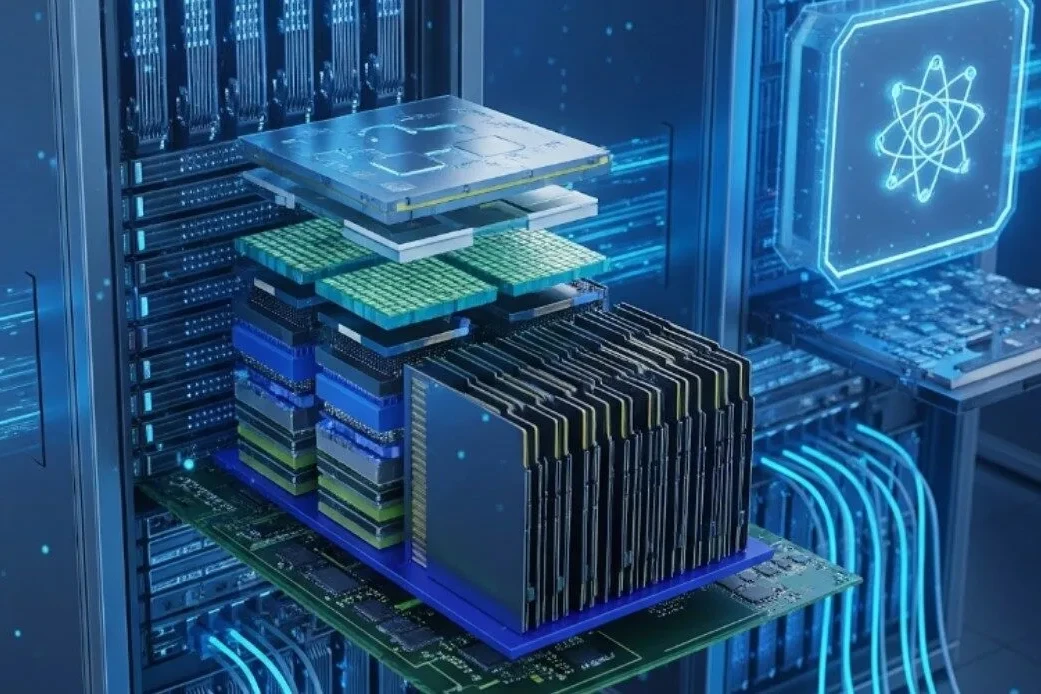
Future ofComputing
Our progress in various fields, from everyday use to pharma and research, is increasingly driven by computing capabilities, driving a huge demand for compute.

Frontiers inHealth & Bio
Advances in healthcare and life sciences are increasingly driven by the convergence of biology, engineering, and data. This convergence is unlocking more precise, efficient, and accessible solutions for patients.
Insights about European deep tech innovation
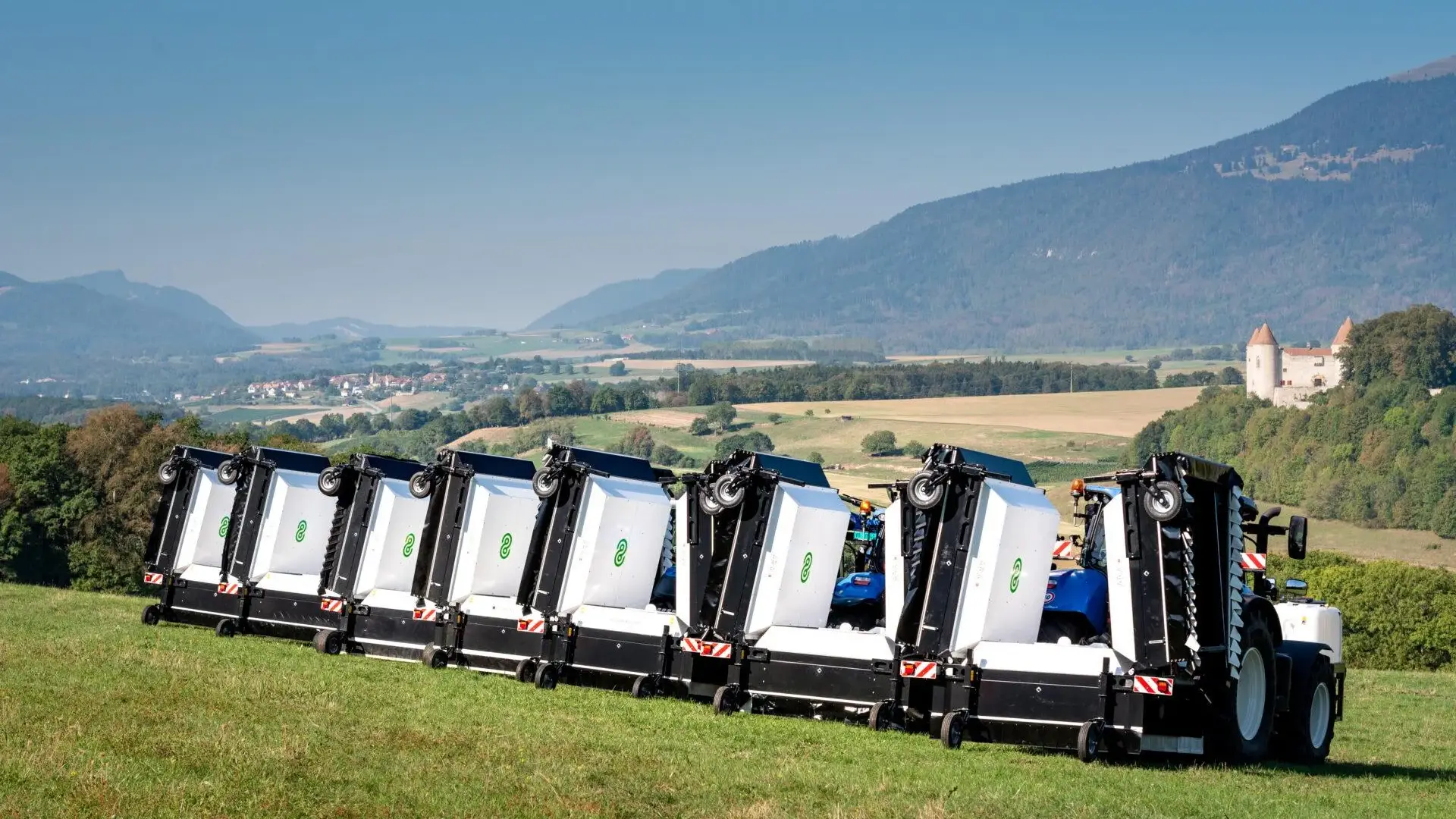
Ecorobotix sells 1,000 ARA Precision Sprayers to Global Agricultural Markets
Ecorobotix marks a major milestone with 1,000 ultra-high precision sprayers deployed, significantly reducing chemical herbicide use in global farming operations.

Medimaps Group and Radiobotics Merge
The partnership bridges the gap between reactive fracture detection and preventative bone health management across X-ray and DXA modalities. The combined entity will leverage an expanded commercial network to serve hospitals and imaging centers across 90 countries.

From Bern to Global Impact: Looking Back at Our Journey with Ikerian
We are thrilled to announce that EssilorLuxottica has acquired our portfolio company Ikerian (operating under the RetinAI brand). This exit marks a major milestone for the Swiss and European deep-tech ecosystem.