

Rolf Ringdal

What motivated you to join the Board of Directors of Verve Ventures?
Through my friend and ex-colleague from UBS and now fellow Verve board member, Ralph Zurkinden, I have known about Verve since almost the beginning of the firm. As an engineer at heart and education I have always had a passion for technology. The business and entrepreneurship curriculum in my MBA studies added commercial elements to my theoretical tool-box and a fascination for innovation and start-up companies. With my professional experience, working and living in one of-, if not the-, most innovative countries in the world, I’m convinced of the value of venture capital in the innovation ecosystem and Verve’s mission in this ecosystem.
In several meetings, also as a guest in the latest board meetings, I have had the privilege of getting to know the founders and senior management of the company and the other board members well. I am impressed by the professionalism, dedication and know-how of the people I have met, as well as their personalities. My initial knowledge of Verve has turned into excitement and enthusiasm, and a firm conviction of the success of the company, further feeding my motivation to take on the board role.
Currently, I am in a client facing role and Risk Management as a profession is no longer part of my daily routine. The board position at Verve Ventures keeps me in touch with my former profession. With my knowledge and experience in this field I will contribute to the continued success of the company.
In the early 2010s, you helped build a merchant bank from scratch. What did that experience teach you about founders and building something new?
Building a new bank from scratch is a tall order. Not only do you need a credible value proposition, a well-founded strategy and all the right people and tools to execute on the strategy. You also have a great deal of regulatory requirements to meet – rightly so. I simply wasn’t entirely realistic about the chances of the success of the venture. But, the project catered to my entrepreneurial mindset, and at the time, I didn’t have a significant personal downside risk. And, although we failed, I proved some of my skills to myself and I learned a lot. I wouldn’t have missed the project. About founders: It’s not enough to have a good idea and lots of enthusiasm. You need to build lots of trust and credibility to win over investors and ultimately clients. We tried to win over both, simultaneously.
As a former Chief Risk Officer, you managed market, credit, and operational risks for a global private bank. How do you assess the risk of a startup portfolio differently from the risk of a bank?
I think the main difference lies in the risk appetite. Both the bank and the startup portfolio manager are in the business of taking risk. But whereas a private bank does all it can to mitigate the risks and avoid taking losses, taking losses is almost inevitable in the start-up world. In order to find the winners, you have to accept that you also take on a “dud” or four in your portfolio. On a more practical level, this observation applies largely to market risk. Whereas private banks hardly take any market risk and they only take very limited and well secured credit risk, a startup portfolio will certainly be exposed to significant market risk. Operational risk is “everywhere”, but is likely to be higher in a larger organisation with a wide spectrum of business activities, like a private bank, than in a smaller company with a narrower business focus – such as the start-up portfolio.
You earned your Private Pilot Licence during a deliberate career break. What draws you to aviation?
I don’t know exactly when my fascination for airplanes and aviation woke up. But ever since I wrote my high-school work on the development of the legendary Supermarine Spitfire World War 2 fighter plane, my eyes turn to the skies whenever I hear the sound (i.e. not the noise) of an aircraft above. From a vantage point outside the airplane, I guess the fascination comes from technology, physics, speed, (has man built a more beautiful thing than the Concorde?) and the elements. As a pilot, sitting in the cockpit manoeuvring the plane in 3D, understanding meteorological conditions, avoiding restricted airspaces and looking out for other aircrafts, is great fun, challenging and keeps one busy and alert. All even better if completed with a nice and smooth landing, of course.
What would you recommend to people who want to start investing in venture capital?
I have to admit that I am not a seasoned venture capital investor myself. The practice isn’t exactly commensurate with the mind-set of a risk officer, whose focus is more on “what could possibly go wrong” than what could go well. But lending the term of risk capacity from the field of risk management, my recommendation would be to never rule out a total loss of the investment, and be prepared to live well with after the money’s gone.
Our Investment Topics

Resilience inEnergy & Resources
Our future success in fields like computing and pharma relies on a resilient energy infrastructure. We focus on disruptive innovations that leverage collaboration with leading enterprises to scale the next industrial base.

Future ofComputing
Our progress in various fields, from everyday use to pharma and research, is increasingly driven by computing capabilities, driving a huge demand for compute.

Frontiers inHealth & Bio
Advances in healthcare and life sciences are increasingly driven by the convergence of biology, engineering, and data. This convergence is unlocking more precise, efficient, and accessible solutions for patients.
Insights about European deep tech innovation

Resilience in Energy & Resources – Webinar Recording
Missed our Energy & Resources webinar? Watch the recording. Lorenzo Fabritius unpacks Verve's updated thesis on energy, resources and industrial resilience, with the market data behind it. Metafuels and Encosa Energy join to show what building in this space looks like in practice.
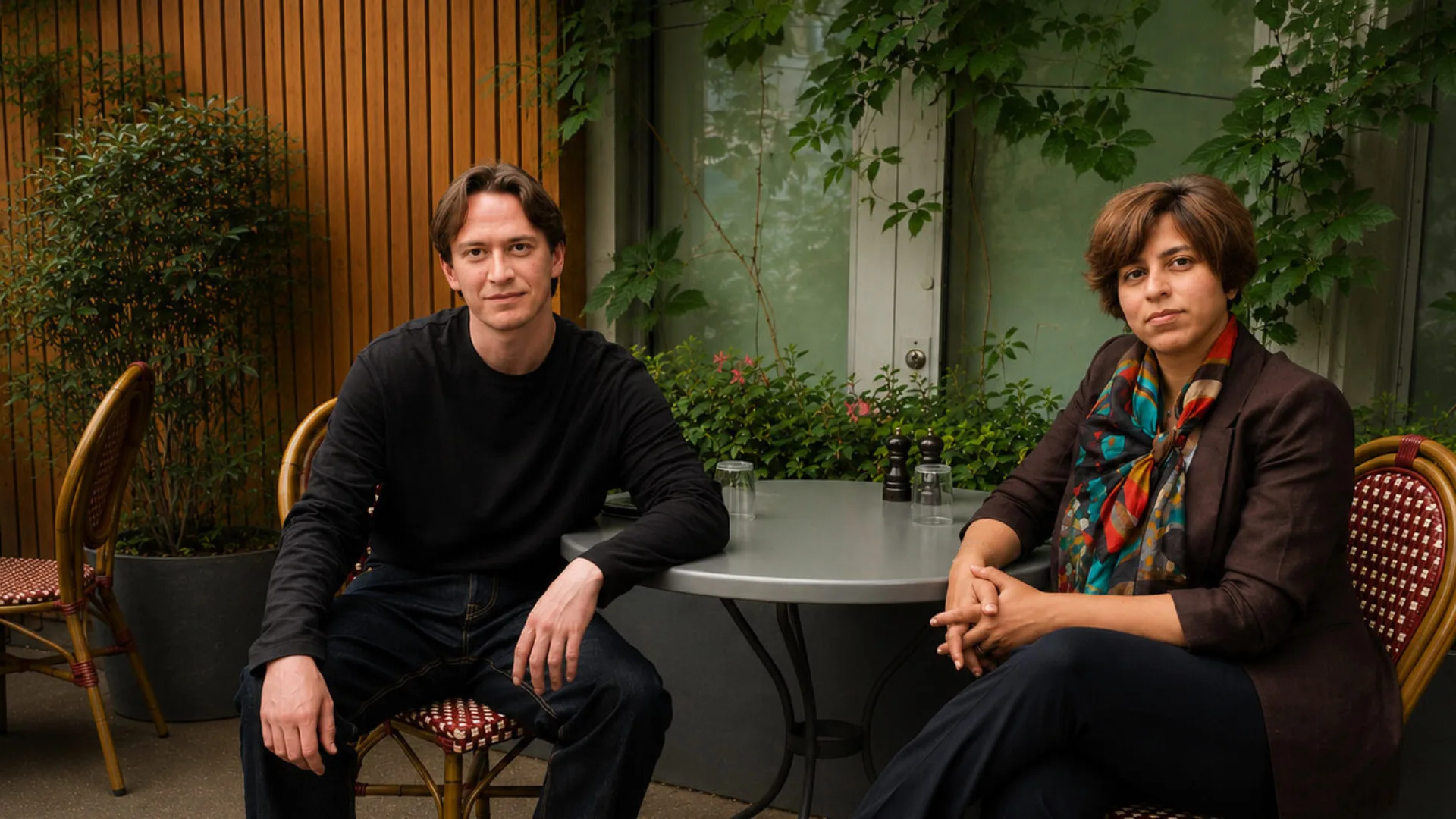
Aylight is driving the Next Generation of Datacenter Interconnects
Aylight is our new portfolio company. The Zürich-based ETH spin-off builds chip-scale lasers that emit many precisely spaced wavelengths from a single device. As AI infrastructure scales, the constraint is shifting from raw compute to moving data between chips. Aylights chip emits a frequency-modulated comb, many precisely spaced wavelengths at once, delivering the parallelism that until now required dozens of discrete lasers.

Verve Ventures secures FINMA securities firm license
This milestone establishes Verve as a pioneer in the venture capital landscape, elevating the firm into the top tier of regulated financial institutions in Switzerland. The license provides an institutional-grade bridge for private and professional investors to access high-growth European technology investments with unparalleled structural security.