

In startups, hiring is arguably even more important than in large companies. It is also very challenging. Here are some valuable findings and recommendations based on a survey of 27 startups, the majority of which are also portfolio companies of us.
 Is there anybody out there?
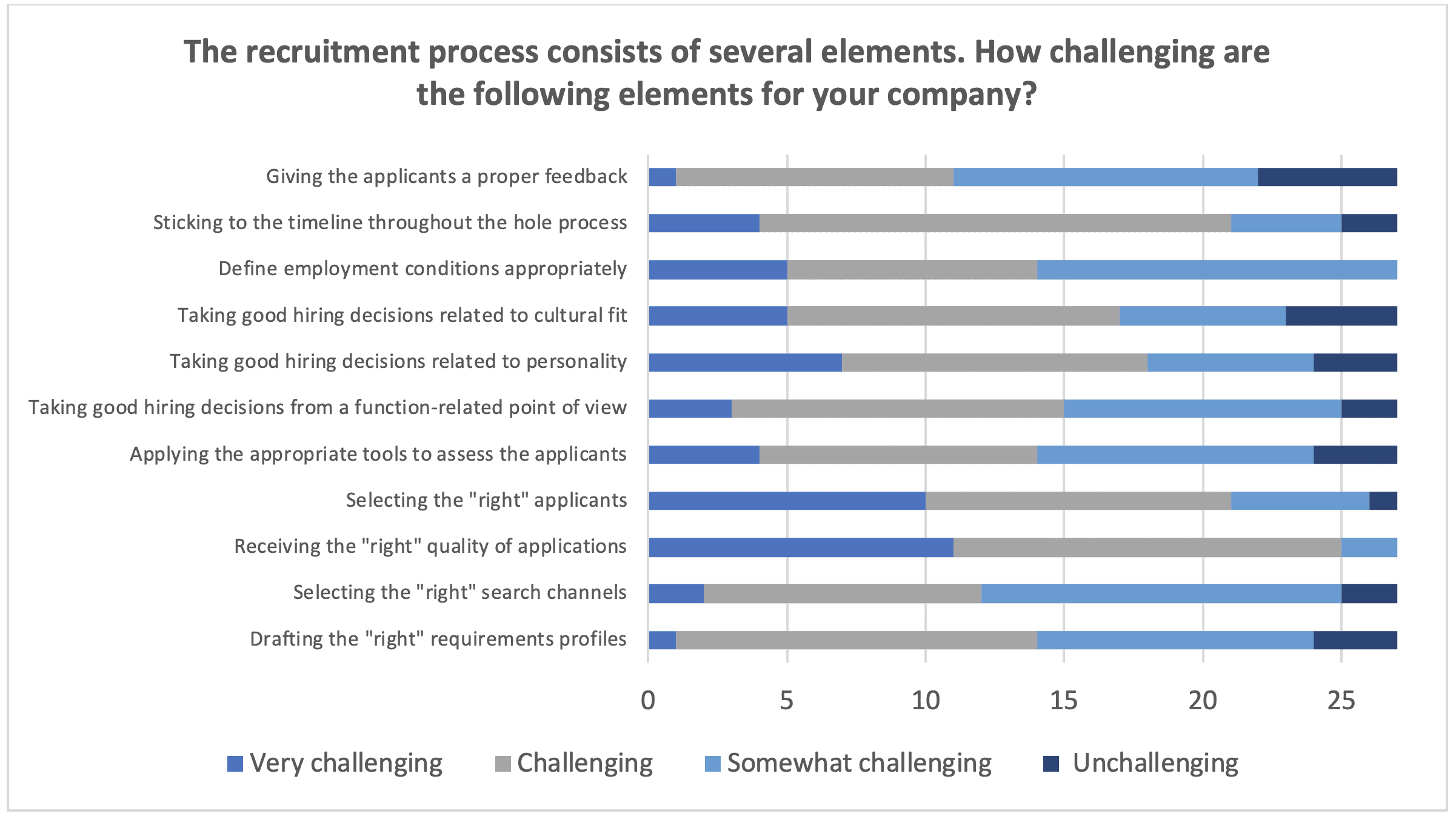
Getting enough applications of good quality is the biggest challenge according to the respondents. If you are a young, unknown company and have to compete with big, established brands, the way you write your job adverts merits special attention. This is not the time to copy and paste. Describing in an attractive and comprehensible way what you do, what you stand for, and what you want to achieve is actually hard work. Equally important is describing what you can offer your future employees. (Hint: free coffee and fruit are not enough.)
To differentiate themselves from the countless other employers looking for talents, startups should focus on their technology, their startup spirit, and the vision they want to turn into a reality. If it is a vision people can relate to, this will help enormously in the hiring process.
When it comes to different recruiting channels, employee referrals have proven to be the most effective one. Startups should make sure that they use the full potential of their own employees’ networks, have a referral program in place, and compensate their employees for their efforts. Creative gifts work better than just monetary rewards. (Startups with more than 100 employees should check out our portfolio company Firstbird which has developed software to facilitate employee referrals.)
What culture?
According to our survey, in two out of three cases it was the employer that had to terminate an employment relationship. The most obvious reason is the (unsatisfactory) performance of the employee. Cultural misfit between startup and the employee came right after that. This is a sign that evaluating personalities and cultural fit isn’t easy but also that it should receive more attention. Having defined one’s organization’s values and using them to assess candidates is only a first step. The hiring decision should be supported (or vetoed) by founders, HR, line managers and the team. Personality tests can be used to give a more accurate picture of candidates.
 For love or money?
Compensation is by far the single most important reason why startups couldn’t win over a candidate they wanted. Aligning salaries with market rates is proving to be a considerable challenge for startups, especially in Switzerland with its pharma and banking giants. Interestingly enough, the respondents were split in two groups of about similar size: One simply could not offer higher compensation, while the other didn’t want to do so.
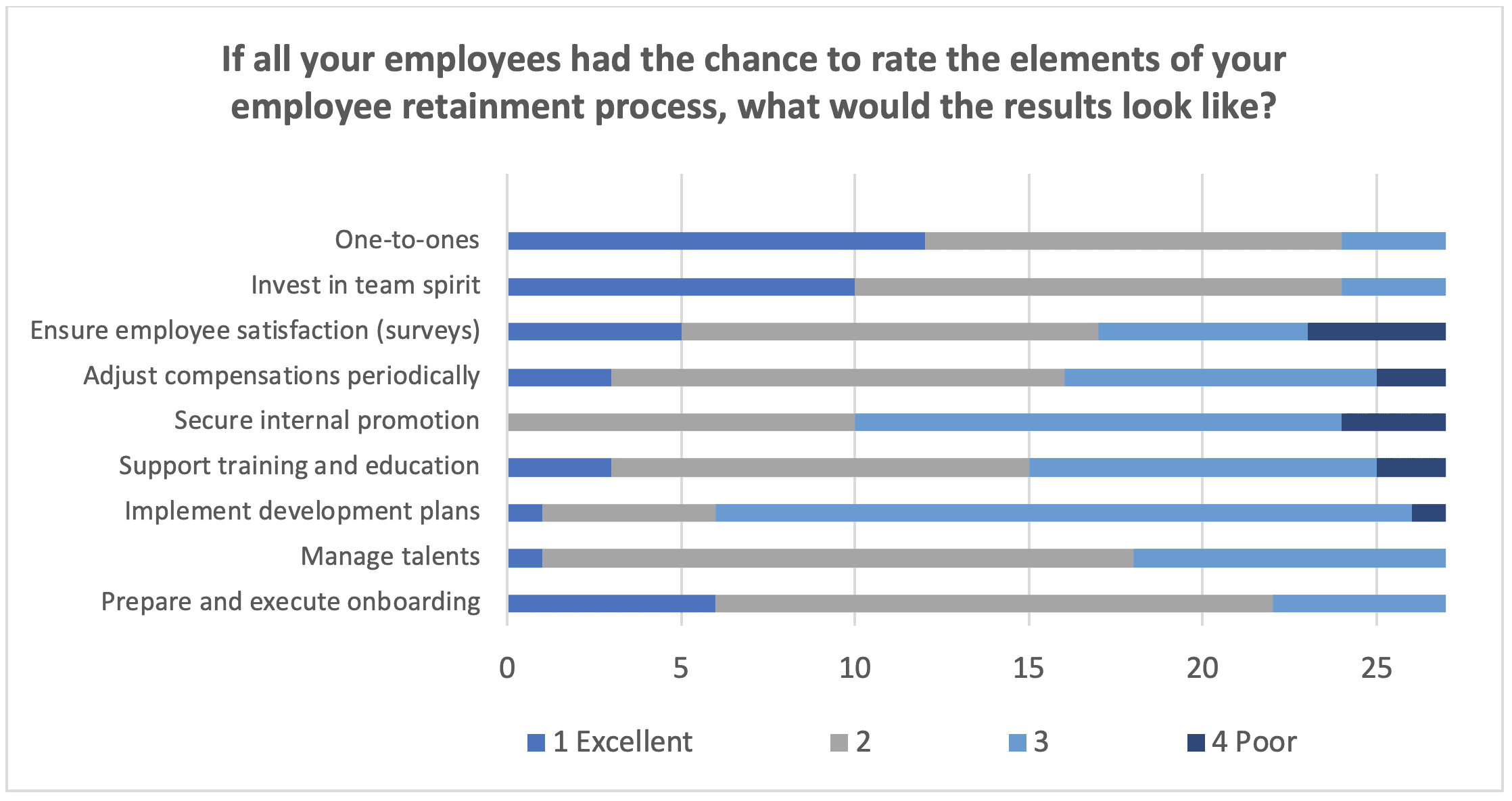
It seems reasonable to suggest that compensations should be discussed with the board of directors and investors and that compensations should be quickly adjusted as soon as the company achieves some commercial traction. Founders should be prepared to pay significantly more to experienced experts than they earn themselves. Fair compensation also has the advantage of reducing the staff turnover rate, which was substantial at the surveyed startups. More than half of the employees that terminated their contract with a startup cited compensation and a great opportunity elsewhere as the principal reason for their move. Another powerful tool to retain employees and help them grow is drafting a development plan for every employee, which should be regularly updated.
 Process? What process?
Creative chaos might be cool, but when it comes to the hiring process it is definitely not. Ensuring a positive employer branding means that the candidate experience counts – not just of those you hire, but also of everyone else. A professional impression is the result of expedient replies to job applications, structured and prepared job interviews, and efficient onboarding and assignment of tasks during the probation period. 4 out of 5 startups have told us that they could still improve the process and the experience it provides to applicants.
The old adage that you cannot manage what you don’t measure, coined by Peter Drucker, applies to hiring as well. Defining key performance indicators, measuring, and acting on them should be a part of HR controlling. A startup should know what the different recruiting channels cost, which one works best, and how satisfied candidates are with the recruiting process, for example.
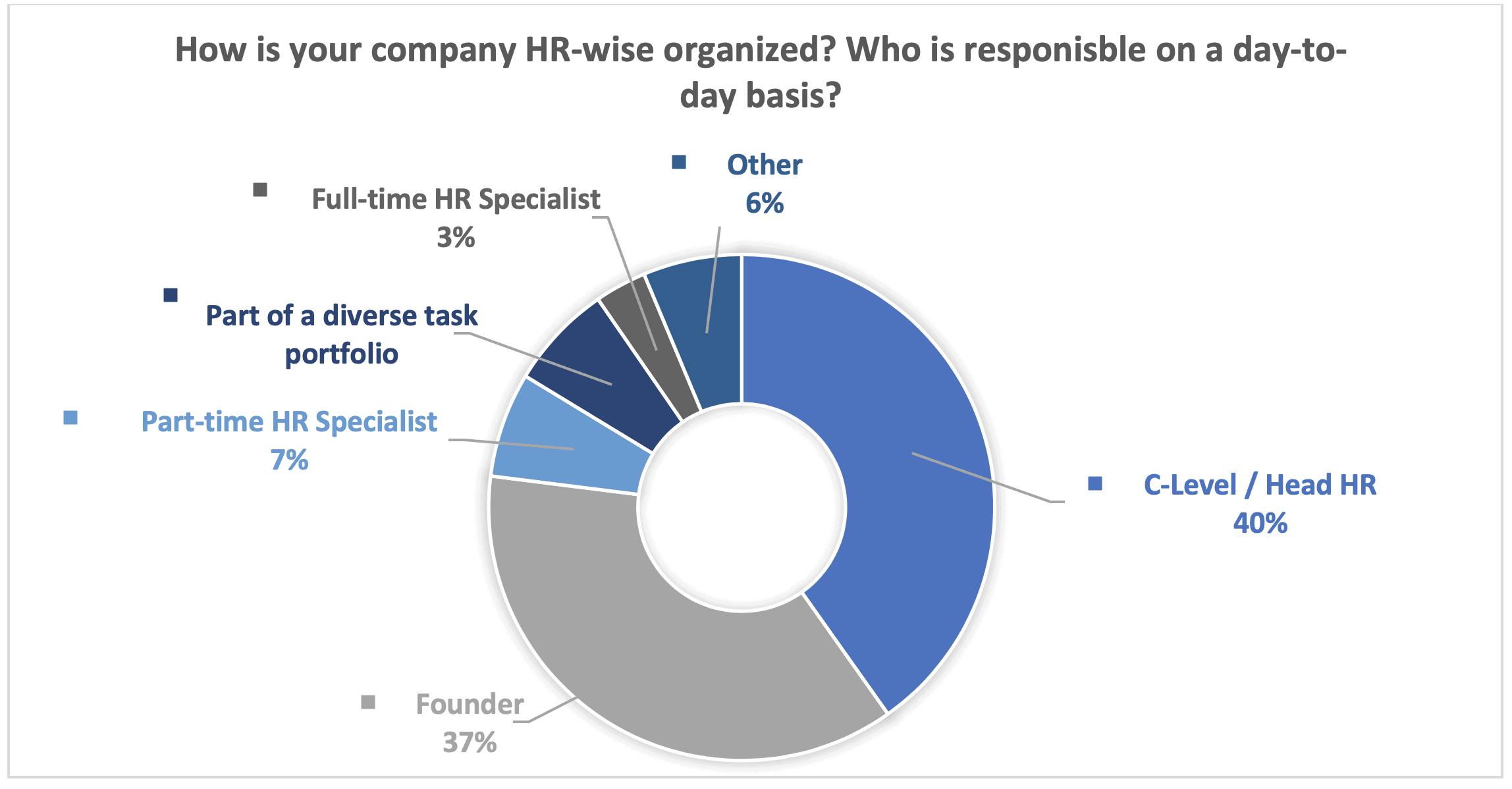
Since the size of the respondent’s companies ranges from 2 to almost 200 people, this is to be expected, as HR starts to become a specialist function only later in the development process of a startup. But there is a common understanding that HR isn’t just an administrative task that needs to be done. Hiring the right people has a tremendous impact on small organizations and is quintessential to achieve one’s strategic goals.
This article summarizes a survey undertaken by Lara Scholl among 27 startups, most of which were portfolio firms of ours. We thank her for these valuable insights. The complete findings and recommendations were shared exclusively with our portfolio companies and complemented with a webinar as part of our Portfolio Success program.
Written by
Investors
Our sophisticated investors include visionary family offices, leading wealth managers, institutions, founders, and senior executives. These individuals and organizations are all committed to shaping the next generation of innovation.
More News

Verve Ventures loves deep tech startups
Many venture capital firms invest in software startups only. They like the scalable business models, the low technology risk, and the prospect of fast exits. Compared to that, deep tech startups require understanding the science underpinning their approach, and more patience until their work starts to have an impact. But many problems of this world demand scientific excellence to solve, and the financial returns of such endeavors can be very attractive, too. In this article, we outline why Verve Ventures is a dedicated deep tech investor.

Supercharging our startups
It has been more than half a year since we established our Portfolio Success Team to help our portfolio companies. We are happy to share a review of what has happened so far, what were some key results and what is coming next for the second half of 2020.

Verve Ventures‘ portfolio: How are our startups doing?
How hard has COVID-19 hit our startups? With over 80 investments across different sectors and countries, our portfolio might give an indication of the impact on the European tech landscape as a whole. While some companies are hit hard, there are also very positive stories to be told. One thing has been made painfully clear: If you invest in startups, you should diversify.