

Costas Meimetis, former entrepreneur now leading u-blox Corporate Venturing activities, tells us what kind of startups he is looking for, what u‑blox investments mean for co-investors and what running a deep tech startup in Greece feels like.
Corporate Venture Capital (CVC) is on the rise. According to the global CVC report, more than 180 CVCs invested for the first time in 2017. That is three times more than in 2013. Among the biggest players are names like Google Ventures, Intel Capital and Samsung Ventures, as well as the VC arms of pharma giants such as Roche, Novartis and Pfizer. But CVC is increasingly seen as a valuable instrument for smaller firms as well, if their business relies heavily on innovation. One example is u-blox, a leading fabless semiconductor provider of embedded positioning and wireless communication solutions. investiere is u-blox trusted partner in venture capital.
Costas, are corporate VCs staid executives?
In my view the most important reason for a company to get into corporate venturing is to stop being staid and unadventurous. So, I think that corporate VCs need to be agile and think like the startups, they need to embrace risks and uncertainty. Having said that, there might be cases where some corporate VCs might be more conservative and risk-averse, but I think this is probably the minority and definitely not the case for u-blox.
Why did u-blox decide to establish corporate venture capital activities?
u-blox started off as a spinoff from ETH Zurich and 20 years later, with more than 1000 employees, presence around the globe and being a recognized leader in the industry, it still feels like a start-up when you walk in the corridors of our headquarters. It’s worth mentioning that u-blox has grown significantly over the last 10 years through acquisitions and these entrepreneurs joined the company. The majority of them are still part of the team.
Having this entrepreneurial DNA, we acknowledge that not every single innovation that is relevant in our field will happen inside the walls of our company.
Investing in attractive startups is a two-way street. We want to leverage our corporate muscles and know how, industry insights, customer base and sales channel. This amounts to offering the investee an unfair competitive advantage, to accelerate its growth and minimize the risks. Beside financial returns we would like to see strategic benefits for u-blox, and this can be things like a joint product offering in cooperation with the start-up that brings value to both parties.
Can you give us a little bit more detail about what you want to do and how?
So, first of all, this is a new initiative in the organization and we follow a “startup” and agile style in our investment journey. The agility stems from the fact that we’ll be doing balance sheet investing, focusing on early stage ventures in pre-seed to Series-A. Ideally we would like to co-invest alongside a financial investor who will lead the round, even though this is not a hard requirement. When it comes to geographies we do not have a limitation but our main focus will be in Switzerland, the UK Golden Triangle between Oxford, London and Cambridge and Sweden. The main reason for this focus initially is that in all those locations we have u-blox members on the ground.
How much influence do you want to exert over a startup as a CVC?
The term I like to use is that we want to be a helpful but non-invasive investor. Having been on the other side of the table in my past, I have experienced how important it is for the entrepreneur to control the destiny of the startup with a minimum of strings attached. So we want the entrepreneurs to have this freedom and also offer them the luxury to tap into our experience and assets to accelerate their plans. Typically we would take a board seat as members or observers when there is not a conflict of interest.
“I have experienced how important it is for the entrepreneur to control the destiny of the startup.”
How close does the technology of a startup need to be to u-blox’ field to be of interest to you?
This is a very good question. Now, if the technology is too close to our current business, then it might be more relevant for an M&A rather than an investment path. On the other side of the spectrum, if it’s too far off from our area of competence it will be difficult to identify strategic benefits. So, it needs to be adjacent to our business, not too close and not too disconnected. Areas like edge-AI, energy harvesting, autonomous driving and IoT sensors are some examples of what is on our investment radar.
What importance do financial considerations have for a strategic investor like you?
Though we do not do this for philanthropy and obviously have a financial discipline in our decisions I would say that financial KPIs follow our strategic ones. So, we might be more relaxed than a financial VC on the IRR and deal’s financial terms. However, we want to help transform the startup we’re investing in, into a sustainable, successful business.
Do you think that when you invest you change the way outside investors view a startups prospects?
I want to believe that the majority will see our participation as an opportunity rather than a threat.
It is indeed a fact that some corporate VCs show unreasonable behavior and insist on onerous clauses, which make a startup less attractive for follow-on investment rounds or M&A. On our side we take a very careful approach in our investment terms to not limit the potentials of the startup with follow-on investors.
How do you assure knowledge from the startup flows to your organization?
Once we have identified that the right departments that could work with the startup, whether it’s sales, marketing or R&D, we approach the topic in a similar way we would do with a privileged partner. So, once the paperwork is done, the introductions take place and the ball moves forward.
You successfully co-founded a semiconductor startup in Greece. You have been on the other side of the table and did several funding rounds, before eventually selling the company to u‑blox. What did you learn on this journey?
Operating and growing a deep tech startup in Greece is, as you can imagine, not the easiest thing in the world. The lack of credibility as a country means the odds are stacked against you when you talk to customers or investors. You’re basically up against a wall, but with a lot of work and persistence we managed to raise funds from both financial and strategic investors and also license our products to high profile customers. I experienced investment discussions and know their implications, and I am aware of what a founder feels and what incentivizes him. I feel that those previous experiences will allow us to resonate with the investees and become a useful partner for them.
 Costas Meimetis has worked for u-blox since 2014, he is a member of the company’s corporate strategy team and leads its corporate venture program. Costas co-founded Antcor, a Wi-Fi IP business that was sold to u-blox in 2014. u-blox is a Swiss startup success story. The semiconductor company was founded 1997 and went public on the Swiss Stock Exchange ten years later, in 2007. u-blox has grown significantly over the last few years both organically as well as through inorganic growth by acquiring tech companies and recently decided to also start investing in promising start-ups, working together with investiere in deal sourcing.
Written by
Investors
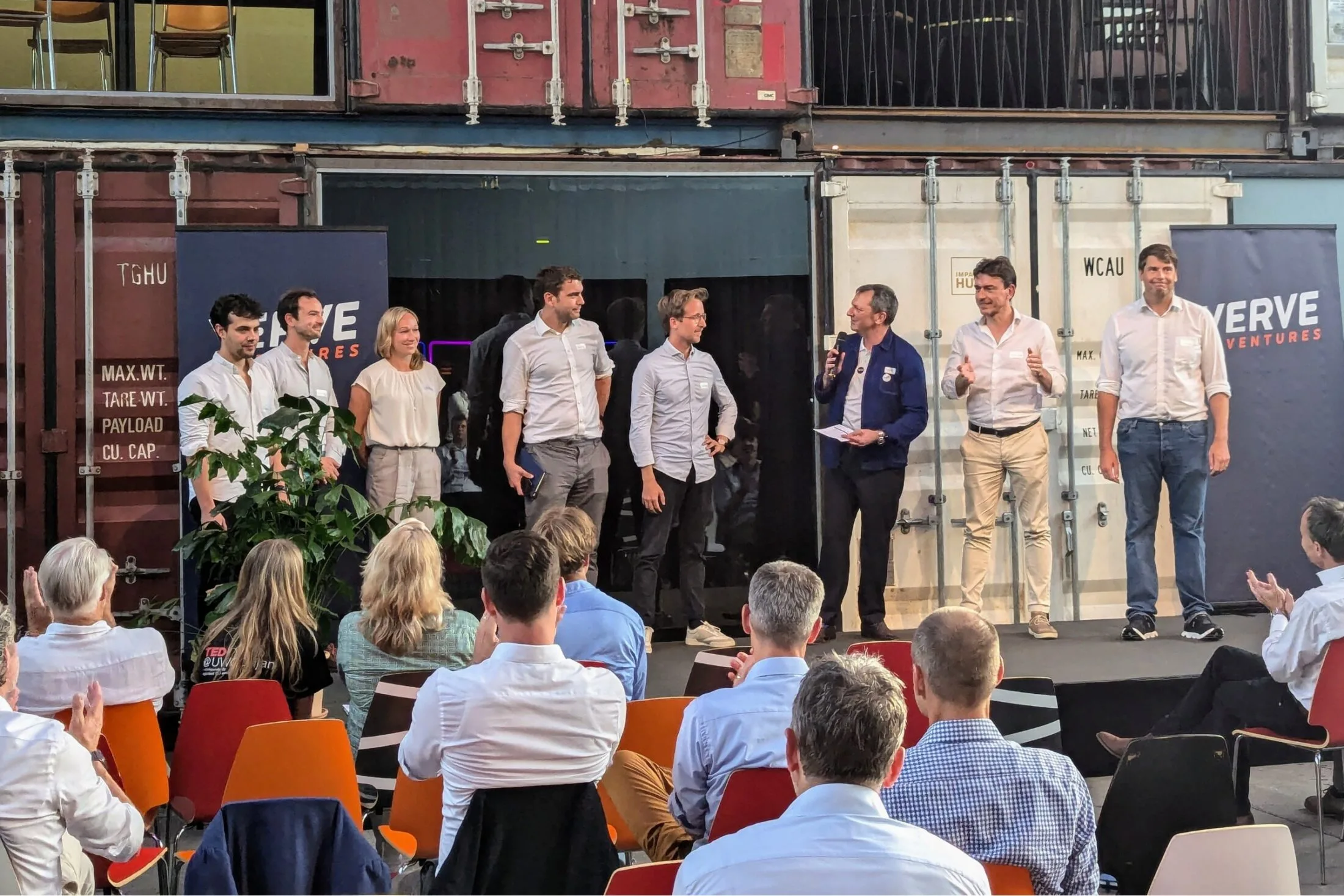
Our sophisticated investors include visionary family offices, leading wealth managers, institutions, founders, and senior executives. These individuals and organizations are all committed to shaping the next generation of innovation.
More News
“A guest lecture on entrepreneurship is not enough”
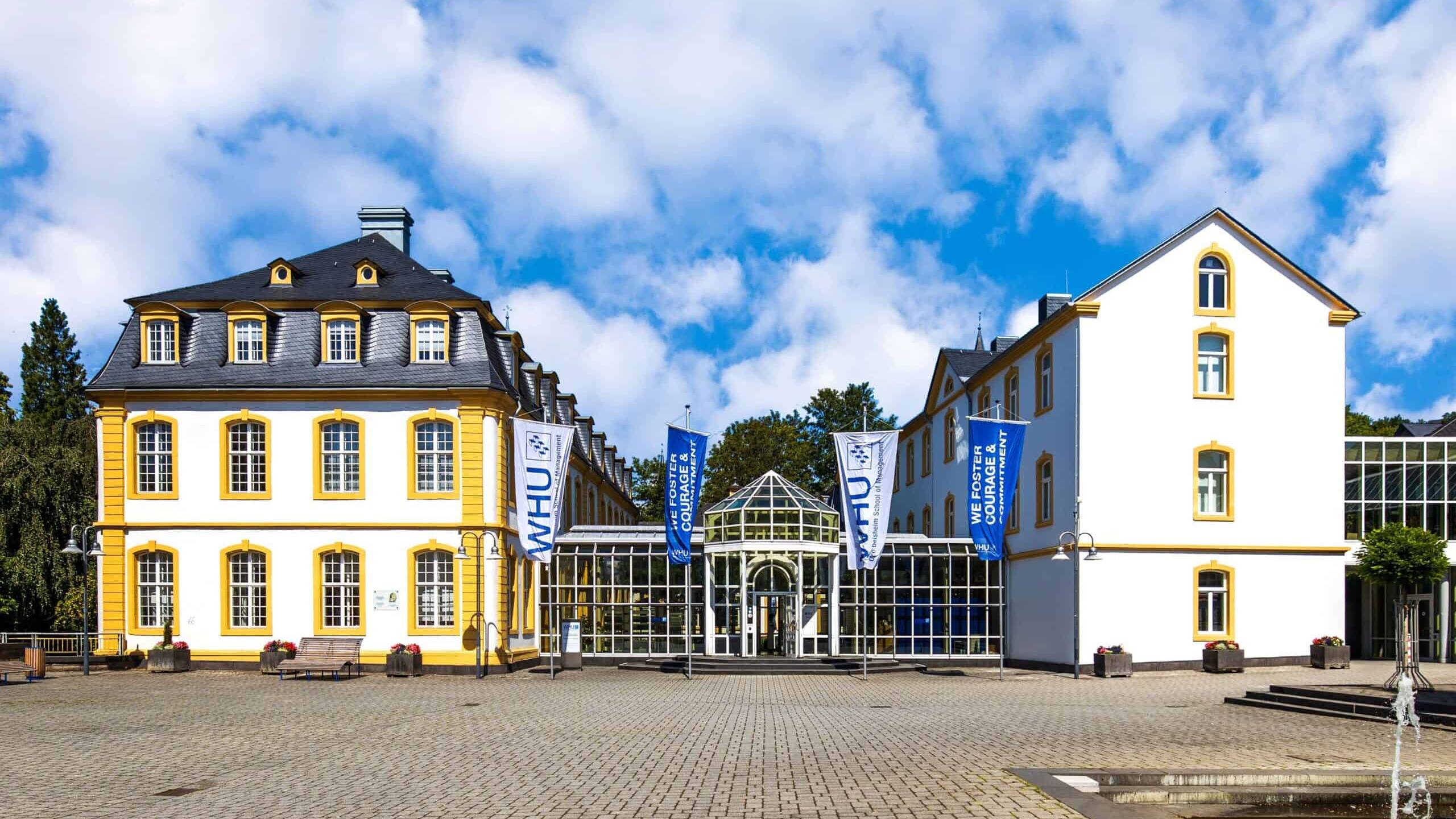
WHU - Otto Beisheim School of Management is one of Germany’s most prestigious business schools and produces more unicorns than most European universities. This year, Verve Ventures has already invested in two startups founded by WHU alumni, namely marta and Erste Hausverwaltung (EHV). Time to find out what makes WHU an ideal training ground for future entrepreneurs and speak to Maximilian Eckel, who heads WHU’s Entrepreneurship Center.

Startup OncoDNA plans friendly takeover of listed company IntegraGen
In February 2020, OncoDNA raised EUR 19 million in a Series B financing round. Now the Belgian molecular profiling company has found a complementary acquisition target that will allow offering the whole value chain from genetic sequencing to clinical applications.
“A stable financing partner for startups”
With Swisscanto’s new growth fund, the Swiss Startup ecosystem will get a large capital injection.